Showing posts with label Chile. Show all posts

Chile on Horseback

the top picture is of horses running wild on the road passing our van. The bottom was my mount, Moreno, and I looking at the lush cow pastures we passed en route to the waterfall.

Wooden Flowers, Chile

The art of the wooden flower is particular to Pucon. Nobody could tell me why (I'm still researching it). The process is simple and the artist I interviewed told me he got the idea from a simple pencil sharpener.


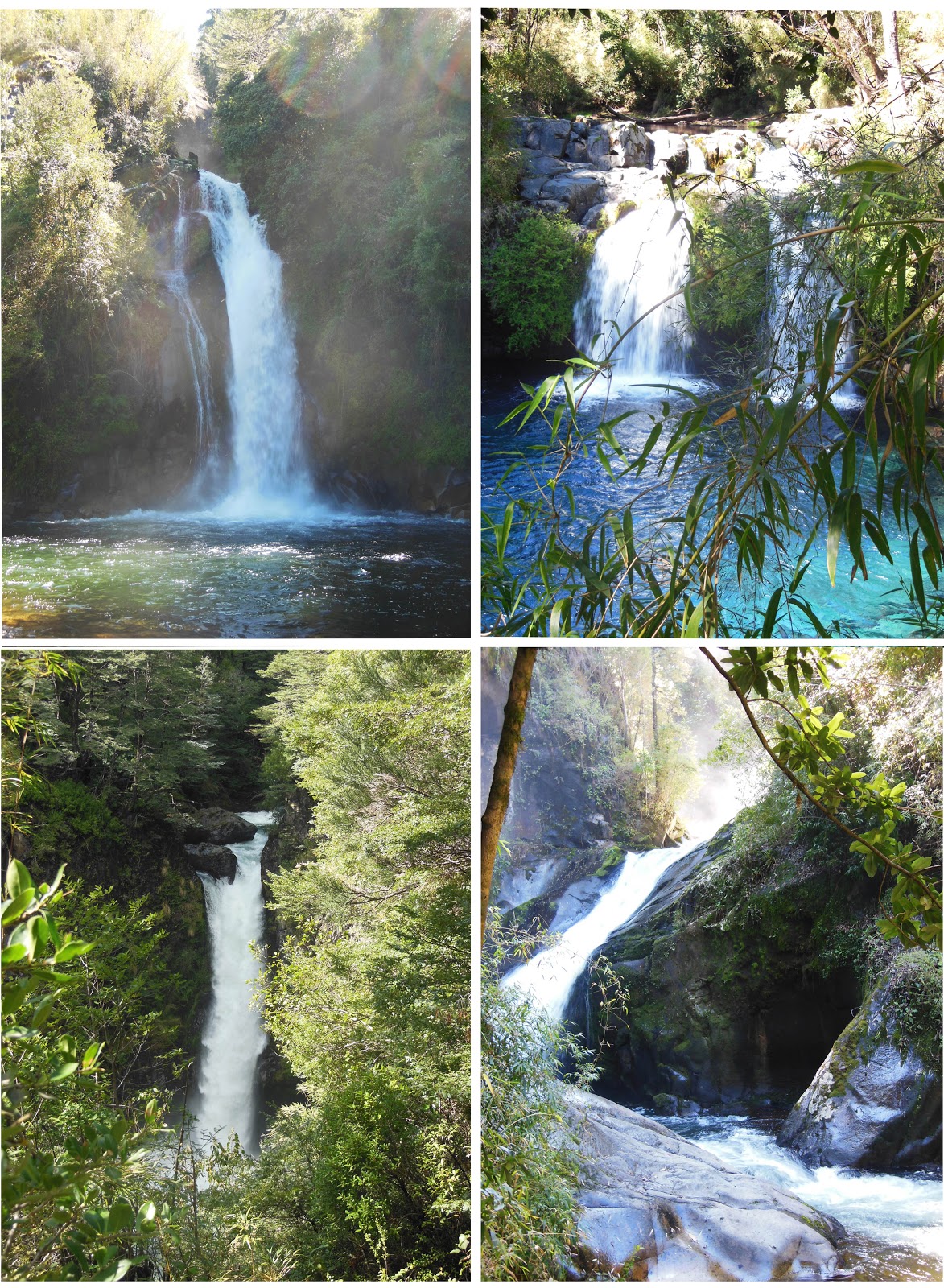
Chile Waterfalls

simply absurd. everywhere we hiked provided striking views of the lake districts many, many waterfalls. I'm not sure if I can climb another steep trek without the certain reward of this eye candy.


Pucon Chile

morning after the storm.

Pucon is a small town close to Villarrica. It’s on the east side of the lake. “Towards Argentina”. In the native language, Mapudungun, it means “entrance to the mountains.” Which is exactly what it is. The Andes Mountains are right there, you can see them from all over town. Huge, tall mountains hovering over anywhere you look.

Valpariso Chile


The Unesco World Heritage site rises from the Pacific Coast like a kaleidoscope of color. Chile's second city is a jumble of cliff-hanging pastel boxes that fit together like a puzzle as they blanket the hills above the old port. Spiraling stairs and 100-year-old funicular elevators connect each dotted knoll to the port below. The town beneath the cerros (hills) boasts an architectural treasure trove of 19th century buildings from Valpo's golden age when it was known as Little San Francisco and The Jewel of the Pacific.


Valparaiso fell on hard times after the opening of the Panama Canal, but the ever-resilient city fought back and is now a vibrant center of Chilean culture. The fading grandeur only makes it all the more attractive to tourists who revel in its spontaneous, bohemian magnetism. TEXT CREDIT: Mark Johanson for IBT

Valpariso Chile

I have to admit that I spent a significant amount of time in Valpariso's excellent bohemian cafe's that seem to appear around dark corners at the top of endless stair cases just when you need them most.

Jewelry making Chile

This small jewelry studio in Valpariso was manned by Mapuche artisans. They were kind enough to give me a demo of their fine technique. PS: I did buy a copper ring. Copper because it is the major economic export for Chile and because I forgot that it turns my skin green.

Chile


Chile

Just a few snaps taken en route to my hikes, there is something magical about the country here.

Mapuche Chile


This ancient civilization that still exists today in the South of Chile has gone through a difficult history, continually facing opposition, but the Mapuche have remained free and independent. One of the most fascinating figures in Mapuche culture is the Machi. She is a spiritual healer within the Mapuche community. Healing ceremonies are private affairs and highly ritualistic. The Machi has an extensive knowledge of medicinal herbs. Her training comes from an apprenticeship with an older Machi who guides the younger woman into the rights of weather prediction, dream interpretation, warding off evil and curing illnesses.


Villarrica Volcano


Though it is called Villarrica today, its original name was Rucapillán or "House of the Pillan," Pillan being a powerful and sometimes disaster causing spirit, according to local mythology. The Villarrica Volcano has indeed caused disaster with the earliest recorded eruption in 1558 and 65 eruptions since. Lava flows up to 18 kilometers long have come spilling out of the glacier covered volcano, and one of the more recent in 1971 killed over 200 people from toxic gas inhalation and mud slides.

The Villarrica Volcano is a beautiful sight, covered in snow year round, and experiencing only small eruptions. Among the unique sights at the Villarrica volcano are its volcanic caves, the only caves in an active volcano, visitable on earth. One can travel hundreds of meters into the side of the active volcano and see the hardened remains of was once an active lava flow oozing out of the mountainous side.

pucon chile

another rainy day activity I enjoyed was white water rafting. Our 5 person team wore wet suits and tore up the class 3 rapids in style.

cave system in Chile

What to do on a rainy Chile day? Go underground. A unique cave system outside of Pucon with unusual "chocolate" mineral deposits was just the ticket!

Chilean Bee Boxes

In the world of sweeteners, one of the more unusual flavours comes from Chilean ulmo (OOL-moe) honey. Here there are forests with a range of species, as many as 200 species of plant in a single acre. That includes trees that offer flowers for honey. Each box produces 35 to 40 kilograms of honey per harvest. Since ulmo can’t be grown in plantations, the few beekeepers around the countryside provide the entire world’s supply of ulmo honey.

Rari Horse Hair Craft

Rari is a small village south of Santiago in Chile. Here, 200 years ago, a specific form of horsehair weaving originated. This technique has been passed down unchanged: the horsehair is washed, dyed, and woven by hand into small figures.


Their typical motifs reflect elements of the rural world, typically flowers and butterflies, and sometimes religious and country imagery. These objects have kept their expressive and ornamental purposes over the many years. Outside of their decorative qualities they are often functional. These function fall into 3 categories: for the body- earrings, necklaces; for their homes- cup holders, bookmarkers, and lastly objects related to religious rituals- scenes from the Bible and rosaries.

Pomaire Chile


If you have ever eaten at any restaurant in Chile, one of the pots or plates was likely made in Pomaire. It's unconceivable to imagine eating Pastel de Choclo (Corn Cake) in anything other than an earthenware bowl from Pomaire. In 1583, due to the growth of its population, the founding tribe moved to Pomaire's current position which is surrounded by hills that were a source for the clay they needed for their pottery.

From the middle of the 19th century, community leaders began to motivate the local inhabitants to produce more pottery so that it could be sold later at market in Valparaíso. From 1853, a caravan of carts filled with pottery would regularly travel to Valparaiso just before Christmas to sell their wares and from there, continue on to the Virgen de Lo Vásquez Sanctuary for the local religious celebrations at that time.

During the rest of the year, the local potters would often visit neighbouring landowners and farm workers to exchange pottery for food.

The artisans have preserved the tradition of working with clay using basically the same techniques that have been passed down from generation to generation